Thursday, 19 August 2010

PLEASE, FIND MY SON

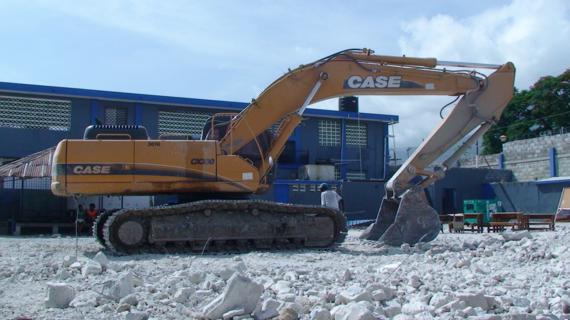
It is over 7 months since the earthquake that shook Haiti entombed over 200,000 people beneath tonnes of concrete and steel. And today as the machinery and the people scrape away the mountains of debris in Port-au-Prince they don’t stop when they see a human bone or two, the machinery and the work only stops if there is an unmistakable skeleton; whole, or almost!

International Agencies and their workers are not allowed to remove remains, a member of the relevant government agency must be present to verify and catalogue the remains. Only once this has been done can the bones be removed and the clearance works continue. It is a callous reality, but the fact is that in Delmas (where the Salvos are working) and I imagine in other sections of the city too, there is not many debris piles that do not contain the remains of people who long ago were counted as dead but unaccounted for – and to stop work for one or two bones has become unrealistic.

The Salvation Army is not involved in this debris clearance work, but yesterday I spent some time with some men that are. They are big, tough construction type guys, but as they told their stories and visualised their work their eyes revealed a sadness and a deep pain that they were finding hard to deal with. Today they will begin to clear the remains of a house where they know the body of a young boy is buried. The father has told them stories of his little boy; toys and reminders have already been found and collected, but today as he watches them work, he has asked that they do all they can to uncover his boy whole so that he can bury him properly.

Work like this continues daily in many sections of the city – but there are many areas that even now are still untouched - the very obvious signs of death ever present. Some commentators and 'experts' have told us that people should be going back to 'green' houses by now, "they should be forced to go back": and some of them could, and some of them have gone back to areas that are cleared and reserviced - but would you go back into a neighbourhood with only yours and one or two other houses standing and everywhere you look signs and smells of death?

Tuesday, 17 August 2010

LETTING PEOPLE DOWN

I know I’m not alone in this, but do you remember how you feel when you believe you have let people down? I feel like that tonight!

I had to propose a strategy for our work here in Haiti that required me thinking rationally and, in many ways, unemotionally. I had to argue the strategy, I had to defend it and explain it to the decision makers (as I should). And then when we agreed on the strategy, when the theoretical had been examined to within an inch of its hypothesis I had to implement it.

That’s when the theoretical becomes personal. Today, when I had to stand before a group of earthquake survivors and deliver the news, and outline the strategy – when I had to watch the looks on their faces and see the reactions in their eyes, that’s when I needed to know why I believe that what I am doing is the right and best thing.

When they reacted by yelling at us, as many would; when they accused us of broken promises, as some do; when they pleaded their case, as we all would – that’s when the hypothetical hurts.

Rationally I believe the decision is right, emotionally I feel like a real lousy person. No matter how good the strategy, no matter how well researched and examined, today I felt like I let people down that relied on me and needed me to be on their side.

Monday, 16 August 2010

WHAT ABOUT DEPENDENCY

In the next couple of weeks some of the IDP camps around Port-au-Prince will begin to close down. Many of the camps are on private land and the owners need their land back to remain self-supporting. So, now that the Government's 3 month ban on evacuating camps is finished INGOs are trying to work out how we relocate hundreds of thousands of families.

But like many things in this humanitarian disaster world not everything is plain and uncomplicated. For example, we know that there are people that have moved out of our camp because they have a home to which they have returned, and so they do at night. But then in the morning they return to their shelter in the camp - just in case there's a distribution. Some of them need the support still, but others, (like the 'gamblers' I mentioned yesterday are abusing the system).

Surveys have been done on most camp inhabitants and people's houses have been labelled: Green - they could go back; Orange- they could go back with some support to repair damage; Red - their house is destroyed.

So, now has come the time when the NGO Community and the Government together have agreed that it is time to ask the 'Green' people to go home; assessments are being carried out to determine a viable means of helping the 'Orange' people repair their houses and move out of the camps. It leaves the problem of the 'Reds' but together with others we're working on that.

The issues that we are dealing with here are obviously numerous, but perhaps most sensitive amongst them is the issue of dependency. If the NGO community continues to distribute supplies and develop temporary camps then we make them permanent. And for many the temporary is already better than the places they were in before. In fact many families have moved into IDP camps from the country areas because they heard there was free food and water etc.

In our camp, not on private land, there are about 4,000 families - many from one of the most disadvantaged neighbourhoods - we cannot, and the government will not, let the camp continue indefinitely, but how do we make sure they get to live life with dignity and yet not be the means by which a completely dependent and unsustainable community is established on a soccer field?

Sunday, 15 August 2010

GAMBLING FOR SOAP

Last week one of our Partners in Camp development decided to distribute some materials to the IDPs in Place de la Paix. They did most things right: they had our committee distribute the vouchers to about 1,800 familes; they contacted the UN Security and arranged escorts and security for the day. They got there early on the day; the area was secure, the route in and out was clear and their station was set up. Soon after 'orderly' distribution began: each family was to receive 12 bars of soap worth about 80 Gourdes (that's about USD 2.00).

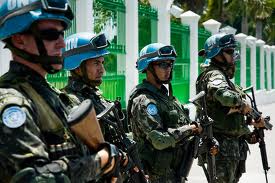
It became obvious very soon after the distribution commenced that the 'orderly' part of the event was under threat. There were raised voices in teh crowd, and that was very quickly followed by some scuffles: and then it happened, some began throwing rocks at the NGO personnel and the UN Military Escort. When the first rock hit a Brazilian UN Soldier on his blue helmet you could tell that this was not going to be a fair fight!

The UN Militia quickly surrounded the NGO personnel and escorted them to their vehicles and down the cleared exit route as the first shots rang out. Firing into the air the crowd very quickly got the message - the distribution was over. (No one was hurt.)

So what happened? Allegedly (no doubt actually) certain 'business men' approached a number of IDPs and offered to buy their vouchers for between $5 and $7 each. Some had bought 10 or more vouchers - unfortunately they didn't know, and didn't think to ask, what the distribution items were. When they discovered that their gamble had cost them, they were, shall we say, unhappy.

Lessons to Learn: As The Salvation Army has always said: Gambling is not a good habit to get into. (Especially not if you take your losses out on heavily armed Brazilian soldiers after their team has lost the World Cup - Not Happy, Jan!) And, maybe you should get yourself a blue helmet!

Saturday, 14 August 2010

MINISTRY OF PLANIFICATION

It is a real place and I spent most of my day there today. What used to be the US Embassy (before they moved to a grander more 'Fort Knox' like building) has become the new home of a number of Government Ministries after the January 12 earthquake levelled their offices next to the Presidential Palace.

As part of the process of importing container loads of relief goods The Salvation Army has been undertaking the lengthy process of obtaining a Franchise Certificate. This will allow the Salvos to be on a priority list for importing, and on many occassions waive the customs duties and taxes. You would understand it is an important accreditation - and today - after months of paperwork and stress by many people before me WE GOT IT!

The promise of the Ministries of Planification and Finance is to set up a sub-office at the port which will process these import issues and their hope is that, providing the paperwork is in order, containers for INGOs with a Franchise Certification will be processed within one day.

Great news! But also more work as it means the potential arrival at our warehouse of 8 more 40 foot containers containing food, tents and other relief items. Which means more distributions. So it looks like the team is going to be busy - but good busy.

Thank you Minister of Planification (who didn't look anything like Voldemort for you Muggles our there) for listening today.

Friday, 13 August 2010

MEET EDWEESSA

Late last year Edween and Pauleene got married and moved into their first house together; they were excited soon after to discover that they would also welcome their first child into their lives. They celebrated Christmas together, hosting their families at their place. Life was tough, but it was good!

Edween was employed by the Railways as a porter and whilst he didn't make much he had a job and an income - he was one of the lucky ones.

Then on January 12 this year, when Edween was at work and Pauleene was home, the earth shook. Edween watched as a 15 foot high concrete wall fell on market sellers, killing hundreds; awhilst Pauleene ran as their house fell down around her burying most of their meagre belongings and destroying the furniture they had managed to buy together.

Edween and Pauleene moved back into his parents house, Edween lost his job because the railway station was damaged and Pauleene was 3 months pregnant.

Soon after that time Edween began to work as a driver for The Salvation Army's International Emergency Services in Haiti, and on July 23 (8 days 'late' and adding much to the stress levels of an expectant and impatient father) a beautiful little girl, Edweessa was born - mother and baby were healthy. The family is happy, they are alive, they are well, but life is still a day by day existence.

But today was a good day: thanks to the Children at Joyville in the Phillipines, (Manager: Captain Debbie Serojales) who raised some money to assist someone that had been affected by the earthquake I had the privilege of having the family over for lunch and then taking them out shopping. We were able to buy some much needed baby items for Edweessa, some nutritional supplements and 'luxuries' for Mum and Dad even got a couple of 'luxuries' too!

Edweessa says thanks kids, and thank you for allowing me to make some people very happy.

THE UNFAIRNESS OF MY PRIVILEGE

There’s often moments of guilt in this business – for me anyway. That moment when I realise how much I have and how privileged I am. The latest moment came for me this morning.

I was sitting on the verandah of our house having breakfast; I had just made two pieces of toast spread with that most delicious of spreads, vegemite (brought from home) and grape jam, and a cup of black tea. In that moment I was struck with the now indelible images of the families in our camp – little grubby half naked kids running to me, calling out ‘hey Joe’ and asking for bags of water, for food, for money. Reaching up to grab my hand and walk with me, touching my arm to see what this hairy white skin feels like, stand still long enough and they reach down to lift up my trouser legs to see if it’s the same down there! The older teenagers ask for food and a soccer ball. The Mum’s ask for milk, and for food. The Dad’s ask for food, water and ‘cash for work’.

As you walk through the camp you can’t help but be struck by the ingenuity of the people. In the context of a mass camp, there are some impressive structures. Some have laid concrete to strengthen their footings and make their tin shelters water proof, (at ground level anyway) most have hacked into either the mains power or our generator power to hook up lights and some TVs. One man has built a theatre by enclosing his 12” TV and Video player and charging people to come and escape the camp while watching movies.

But all of them last night endured another night of heavy rain, in a camp with inadequate drainage and as the light breaks on them this morning it’s to another day of cleaning out the mud, drying out the clothes, saving what food they can. They will again take their water containers to one of two communal water bladders where they will line up to get their water, and most will do that twice if not more in the day. Mum’s will try and clean their kids. Some kids will make their way to the Concern tents where they’ll join with others to sing, dance and do craft – and get biscuits and juice.

And as they do that, every single day; I will wake in my dry bed; I will get some bread from a fridge that works most of the time (power permitting), I will run around my cold water shower trying to get wet, I will boil water, which I buy in bottles, on a gas stove and I will have a few moments of solitude before my day begins in which I can try and centre my thoughts and prepare myself for another day. I will go downstairs to the office and someone has made a pot of coffee, I will have a light lunch, and later tonight, dinner prepared for me.

I am able to rationalise the unfairness of my privilege but I am not able to forget it. Maybe that’s a good thing?

Wednesday, 11 August 2010

PLATFORMS OF THE MOST HIGH

[As I look out my bedroom window I look to the high mountains; often shrouded from sight by mist, but ever present. It is as I reflect on this reality that I presume to speak for the people of Haiti and offer this prayer and pronouncement of hope.]

Mine is the land of high mountains, Ajiti.
Where do I find God?
I live in the poorest of lands,
Where do I find hope?
When my land quakes and the buildings fall,
my people die -
Where do I find tears?

I look around me and I see the high mountains
But angry scars now gouge their sides;
Even these platforms of the Most High,
The magnificent symbols of my land,
These handiworks of God are changed –
But not forever –
They, like me, will recover;
Together we will heal.

And there is my Hope found,
There in the Creator’s handiwork
I find my reason for believing that
God has not forgotten me.

My God who hears the heavens and the earth
Will not let me be forgotten,
My Creator who does not engineer mistakes
Will not overlook me,
The Architect of the universe
Will not be found sleeping!

My Hope and my Guide watches over me
The earthquake has not destroyed me
The hurricanes will not defeat me.
Despite appearances
My Protector is watching out for me.

You may ask – where is your God now?
And I will answer:
In my people, [In you?]
In my high mountains,
In my Dreams and in my Hope.

Tuesday, 10 August 2010

THERE WILL BE HOPE

Place de la Paix used to be the venue for one of Haiti’s most passionate past times, soccer. Home to the Black Eagles soccer team this sporting venue was the congregating point for hundreds of people seeking to escape the daily grind of life in Delmas 2.

Delmas 2 is one of the most infamous ‘suburbs’ in Haiti; the leader of The Salvation Army in Haiti, (Major Luciene Lamartiniere) who lived in the area for over 13 until on January 12 this year his house caved in around him, says that it was not unusual to hear gunshots, to come out of church and see dead bodies in the road. But despite the reputation Delmas 2 has been home to The Salvation Army’s Children’s Home, School, Clinic, Church (Corps) and Headquarters for over 30 years. The Salvation Army is known here, and respected.

So when, after the earthquake, other NGOs refused to enter the area ‘because it was too dangerous’ The Salvation Army was already there, and continue to serve the community. Today the soccer field and the surrounding Plaza are home to about 20,000 people. Most used to cheer for their soccer heroes on this pitch; this morning, after very heavy rain again last night, many were trying to dry out belongings, and throw out stagnant muddy water.

Right down the bottom of the camp, fenced off, are two large tents. Managed and staffed by Concern these are the Child Friendly tents. Here, this morning, there were about a hundred kids and when we walked in it was as if the King had arrived. The greeted (yelled at) us and sang the songs that they had learned about hygiene, and as I sat with them they offered me their High Protein biscuits that they had just been given for lunch. A tent full of beautiful smiles, gorgeous kids, reaching out to touch ‘le blanc’ and to welcome him into their space.

Here in the poorest country in the Western hemisphere, in the middle of the most infamous suburb in the city, at the bottom of the second largest (by population) IDP Camp in the country, right alongside the mass grave of who knows how many earthquake victims, are the reasons we do what we do. These kids – they need food, clean water, safety, education, love and hope. Most other things are luxuries and I am humbled by their acceptance of me and their desire to share with me the little they have.
"Somewhere amidst all of the confusion, there will be hope, there will be love, there will be God!"

Sunday, 8 August 2010

EVEN THE WINDOWS BOW IN SUBMISSION

It's Sunday and Haiti is eerily subdued. The roads are quieter, (the UN vehicles are hiding) the street markets are almost empty and even the weather seems shy. It wasn't that way last night mind you; we had one of those extreme electrical storms, accompanied by floods of rain, that I have come to associate with hot, humid, tropical countries. It was an awesome display of light and sound, an extreme power event that had the man made electrical supplies quivering in their circuits. Even my bedroom windows bowed in submission to the fury of the heavenly torrent and had me relocating my bed so as not to be showered (although the coolness of the rain made it tempting to stay where I was).

But as awesome as the display was, it was not what the Million or so people living under canvas needed last night. As we head into the middle of the hurricane season, this rain brings new challenges for us, but new misery for people that have already experienced so much. Despite this, as we check the camp, most people are restoring their reality; they are smiling and laughing as they sweep the viscous milk chocolate brown fluid out of their shacks and resettle their worlds, and their meager belongings.

As we walk we notice again that despite the confined and depersonalising conditions people have created homes. Some have laid concrete footings to keep the waters out whilst others have raised wooden beds and furniture on concrete blocks to allow the water free flow access, whilst they remain aloof and oblivious. Many, if not most have electricity, thanks to some ingenious (and illegal) wire tapping and from many come the strains of familiar tunes even though the words are sung in a language not understood by me.

It's Sunday - it's Church day - and it's serious. Those that can't go to church are listening to songs that for centuries have brought comfort and hope to others disempowered, homeless, voiceless and marginalised. Some of the songs, sung by the enslaved of years past provoke questions and emotions that find their genesis in the reality of the Haitian context. Here, in a country built on slavery and then their freedom the songs have new and evocative meanings.

It's Sunday and it's a day to be at home, to be with family, and to intentionally look to a Creator that is beyond the circumstances of their reality and beyond their understanding. But not beyond their faith to believe that somehow, because they exist and God is present (as evidenced in the awesome display of nature last night) that HOPE exists. So, the roads are quieter, the weather subdued and the people? They loudly and enthusiastically worship the God who is present – and wait and hope that the world will not forget.

Friday, 6 August 2010

GOD WHISPERS THEIR NAMES

Yesterday, waste management personnel found the bodies of three ‘unborn babies’ in the waste tank of a portable latrine in Place de la Paix, the Salvation Army managed camp in Port-au-Prince (Haiti) that is home to over 20,000 earthquake survivors.

How do you process the raw emotions - the fear, the desperation, the hopelessness - that would force a woman to make a decision that resulted in her baby being dumped in the sewerage? This isn’t the first time we have made a discovery like this, and once again we have no idea why this had to happen; we have no idea who the mother or the parents are, so this is pure speculation.

Were the babies aborted in a ‘back-yard’ procedure and then unceremoniously and surreptitiously dumped because they were the result of rape and the cause of shame? Were their lives terminated because a mother has spent the last six months fighting to survive in an IDP camp; hungry, scared, hopeless and she doesn’t want to bring a baby into an existence like that? Were their lives ended because the mother is sick and she felt she had no choice, no access to medical support or no money to pay for it?

Or were the babies miscarried or still-born? Is there a woman, somewhere in that camp, grieving a terrible loss and fighting the guilt and the sorrow of losing the greatest and perhaps only hope she imagines she had in the world? Is there a woman hiding in the dark shadows of that timber, tin and tarpaulin jungle wondering why it matters that she fight anymore? Is there a wife, hiding in shame from a husband who doesn’t know? Or is it a frightened teen, orphaned by the earthquake that has no idea how to deal with what just happened and no support to help her?

And as selfish as this sounds what do we, the Camp Managers do about it? And how do we help our team deal with the terrible cost of hopelessness and fear? How do we help them understand that this is not their fault; that there is no amount of vigilance, no amount of care and concern that could have avoided this? How do we assist them to overcome the shame and anger they feel? How do they process their feelings of inadequacy?

Don’t tell us it’ll be okay because God is good; don’t pronounce us faithless because when we hurt, we doubt God exists. Don’t condemn me as unchristian because I want to hit people that take advantage of powerless and hopeless people. Don’t tell us to love because God is love! And don’t tell us you love us, (in the Lord), despite our apparent uncertainty, and what you call disbelief!

All it does is convince me that some have never looked into eyes of utter despair and complete hopelessness – and seen God! All it does is remind me that faith can be so shallow that it doesn’t allow for doubt, for hurt, for suffering and complete despair – and simultaneously, God! I have been preached to in religious clichés about a theoretical faith – but ‘they’ show me, by their determination to survive, a deep faith in a God they trust to love them - even if they can’t love back.

How do we help women like those described above? Truthfully, I don’t know; but maybe we’ll start by sitting, saying nothing, just being present. Somehow honouring the lives of these, and other discarded babies and restoring the dignity of life. We’ll remind them, and ourselves, that God doesn’t make junk. And maybe, by showing we care, by being present, by loving them even when they reject us, shove us away and yell at us – just maybe they will begin to like themselves again.

Thursday, 5 August 2010

PACMAN ON REDBULL OVERDOSE

You ask the NGO Coordination group and they will tell you that since the earthquake there have been up to 900 different NGO and Humanitarian Agencies of various sizes in the Haiti. Each of these requires at least one car if not many more. One NGO I know of has 5 brand new specially designed Land Cruisers on the docks, and that’s a small fleet. (We hire local drivers with their own cars, and have bought three vehicles, including two trucks.)

The roads are in terrible condition, I have not travelled on a road yet that does not look like Swiss cheese, the 'pot holes' (more like bunkers guarding the 18th) are unforgiving, and the traffic is like something out of a dodgem circuit – though miraculously there are fewer accidents. Between the ‘assertive’ taptaps, the self important government cars and the seemingly immortal motorbike riders the roads were chaos before January 12.

But now, add in what must be hundreds of UN vehicles which range from the infamous white SUV with the obligatory flashing lights, to the troop carrier and ‘tank’, the mega-fleet of USAID dump trucks, and the multitude of water-carriers, and chaos has become the ultimate understatement.

But my biggest whinge (complaint) - since that’s what this is – is the way the UN vehicles treat the rest of the road users. You would be forgiven for thinking that the UN are the most important people in Haiti and they couldn’t possibly wait in traffic like the rest of us peasants – they act like a giant Pacman on a Redbull overdose. They are the single most visible vehicle on any road and you can’t miss them with the huge blue UN emblazoned on the vehicle. And who would defy them, they usually have some kind of weapon visible and threatening as they pull alongside and refuse to acknowledge your existence as they force their way in front and through.

I live 10 miles from the IDP Camp we manage, and some days it takes 1.5 (the other day 2.25) hours to drive one way. I know this time/distance compares favourably with some places, like Manila - but seriously, Mr. and Ms. UN if you treated other road users like your mandate suggests (with dignity and respect) you’d make life on the roads just a little better – and who knows maybe others would follow your example – oh, wait a minute they already do!

Ok, whinge session over: sucking it up and getting on with it now :)